.avif)
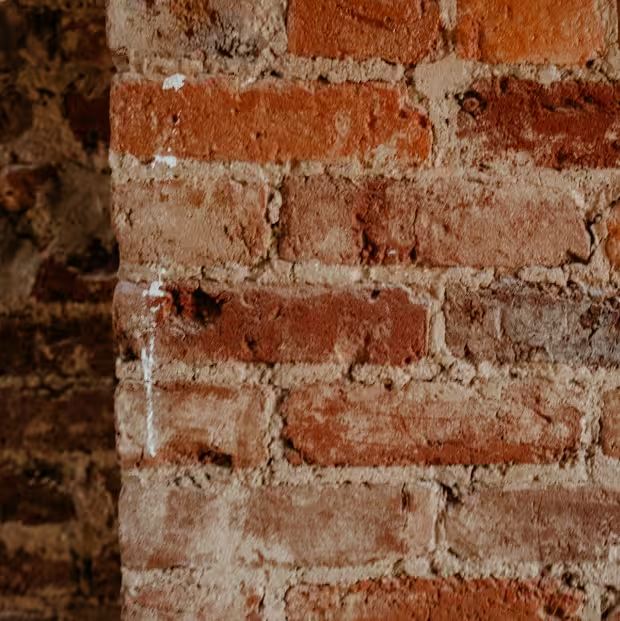
There is a quiet gravity that pulls us toward places with historic texture. I am drawn to places where countless layers of paint cover hot-riveted bolts, where wet lime plaster was once troweled over lath, or where a three-wythe masonry wall draws its hue directly from the local clay.
These places touch on something deep within us, both physical and psychological.
We are drawn to places where others have existed.
I believe the depth of a building’s history is proportional to its pull. Places of congregation carry a stronger force than those where only a few gathered; it is as if the energy of those gatherings sends a ripple through time.
When I stand in these spaces, I like to sit with the memories derived from the room. You can feel the lives of the humans who stood there before us.
- Someone worked here.
- Someone lived here.
- Someone cried here.
- Someone died here.
You don’t need to know the chronological history to feel the weight of the foundation.
Designing for Connection, Not Convenience
Humans are explorers by nature. We are wired to uncover things that feel distinct. When we encounter something old, we intuitively know we have found something real.
Historic places were built around the human experience. They were not designed to accommodate the turning radius of a car or modern conveniences; they were designed for people and connection. When we revitalize these spaces, we must seek a balance.
In commercial real estate, metrics like parking ratios often drive initial selection. That is the data. But the texture and feel of a place, the soul of it, is often how the final decision is made.
We want to exist in places that bring our customers and employees a sense of vitality. We want places where people want to stay.
This is why I love historic places, and why we continually seek to shepherd them responsibly into their next chapter.